
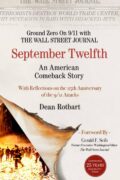
A newly expanded edition of “September Twelfth: An American Comeback Story” returns readers to how The Wall Street Journal handled the Sept. 11 terrorist attacks and what the response has to teach businesses, institutions, and individuals today.
Written by veteran journalist Dean Rotbart, the 2026 edition recounts how The Journal produced its Pulitzer Prize-winning Sept. 12 newspaper after fallout from the collapse of the World Trade Center left its main newsroom unusable, scattered reporters and editors across New York and New Jersey, and severed normal lines of communication.
Cut off from their newsroom and often from one another, the reporters and editors relied on experience, judgment, and a shared determination to get the next day’s paper published.
As Rotbart writes in the new edition: “Buildings can disappear. Character remains.”
Reporters gathered facts from the streets. Editors improvised workspaces in apartments and at a backup facility in South Brunswick, New Jersey. Technologists activated crucial production systems. Others saw what needed to be done and did it. “No paper at all was unthinkable,” recalled Jesse Lewis, then the Journal’s global copy chief.
The 25th anniversary edition adds more than 70 pages of fresh content that deepens the story and extends its lessons.
Gerald F. Seib, the Journal’s former executive Washington editor, contributes a new foreword reflecting on 9/11 and its lasting consequences. More than a dozen current and former Journal reporters and editors also look back after a quarter century, recalling the unity that followed the attacks, the professional culture that enabled them to act without waiting for instructions, and the profound changes that have reshaped the news business.
The new edition also includes a biographical portrait of Paul E. Steiger, the Journal’s legendary managing editor, examining the experiences that helped prepare him to lead under extraordinary pressure. The 2026 epilogue traces what happened to many of the journalists whose experiences form the heart of the book.
The Journal’s response was not something its staff invented on the morning of Sept. 11. It grew out of years of hiring good people, training them well, setting high standards, and giving them room to use their own judgment.