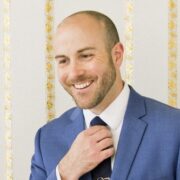
Reuters technology correspondent Stephen Nellis sent out the following to his colleagues:
Reuters Colleagues:
Stephen Nellis here from the San Francisco bureau. After a decade, today is my last day at Reuters. And more than 20 years after my first byline at my hometown paper in rural Missouri in the US, it is also my last day as a professional journalist.
After odd jobs as a line cook and working a refrigerator factory floor, I started down the journalism path at 19 at the University of Missouri School of Journalism, where our foundational text was “The Journalist’s Creed,” written by the school’s founder, Walter Williams, in 1914.
Some of you will know it. It begins with the line “I believe in the profession of journalism” and goes on to outline what good journalism should look like and how journalists should conduct themselves. I have reprinted it below, and I wanted to share some observations from trying to live it for two decades.
But first, some obvious things. You have to be a little different to be a journalist. If you do not feel the upwell of righteous indignation at injustice, if you are not viscerally compelled to shout “bullshit!” when you hear government or corporate spin, it is probably not the job for you.
It is not just a job. It is a tattoo on your soul that says, “I won’t stand for less than the truth.”
It is also a job that requires operating in public. You put your name at the top of the story and take accountability for it. The glory and the agony of the byline are both yours. Unlike more private forms of truth-seeking, you must be willing to thrust yourself into what can be a rancorous public conversation.
One more obvious thing. In bicycle racing, there’s an old saying that “cycling is an individual sport, won by teams.” That holds for journalism as well.
In my print days, I remember leaving the newsroom at 10 p.m. after a wild, 12-hour news day to hit the bar, hearing the presses rumbling in the basement my way out, and then waking (mildly hung over) the next morning to a paper on the doorstep — only to marvel that a merry band of oddball reporters and editors had conjured such a thing into existence in less than 24 hours. It was a daily miracle.It is even more amazing here at Reuters, where our news cycles are measured in seconds or minutes, and stories follow the sun. I have loved waking up to the kick-ass scoops our colleagues in Asia and Europe published while I was asleep. I have loved that all my best stories had more than one byline.
Now to the conclusions.
Unlike many fields, there is no formal credential or license to practice “professional” journalism. There are no barriers to publishing and distribution in the digital age.
Anyone (or, with AI, even any robot) can claim the “journalist” mantle, and now many do. The internet is a sea of rumormongering, agenda-pushing and social media chatter, all of it now joined by our newest friend, AI slop. Much of it superficially apes our style.
What elevates what you at Reuters do above all that noise is a dedication to ethical reportorial rigor and to working in the public interest. It is the belief in a knowable truth, and that power in all its forms must be held to account.
The secret I have learned after 20 years in newsrooms is that there is actually no such thing as a “profession of journalism.”
There are only people — all kinds of strange, wonderful people on these islands of misfit toys that we call newsrooms — who come together every day to work their asses off for a public they mostly have never met and never will.
Often these people are rewarded by the public with scorn or indifference. Without fail, they are rewarded by their employers with more stress and less pay than they deserve.
But somehow these people come back together in newsrooms each day to do it all again, every day. The “journalism of humanity, of and for today’s world” that Williams wrote about more than 100 years ago only exists today because people in newsrooms, in both their individual and collective capacities, decide to make it exist for just one more day.
So after two decades, I do still believe in the profession of journalism. What that means in practice, though, is that I believe in each and every one of you.
These ideals are alive in you. Without you and the work you do each day, they will perish.
It was an honor to work among you.